Sigma Funding Group. All Rights Reserved
Privacy Policy | Terms & Conditions


Invoice factoring is a financial arrangement where a business sells its unpaid invoices to a third-party financial company, known as a factoring company. In return, the business receives an immediate cash advance, typically up to 90% of the invoice amount. The factoring company then collects the full payment from the client. Once the invoice is paid, the factor sends the remaining balance to the business, minus a small fee for their services.
The staffing company model makes it especially suited for factoring. Your main operating cost is payroll, which must be consistently met on time to retain your talent. However, your revenue is tied up in invoices with long payment terms. This results in a constant cash flow challenge.
Factoring addresses this issue directly. It turns your unpaid invoices into the immediate working capital you need to meet payroll obligations. This steady cash flow enables you to hire more temporary staff, secure larger contracts, and expand your business without being constrained by slow-paying clients.
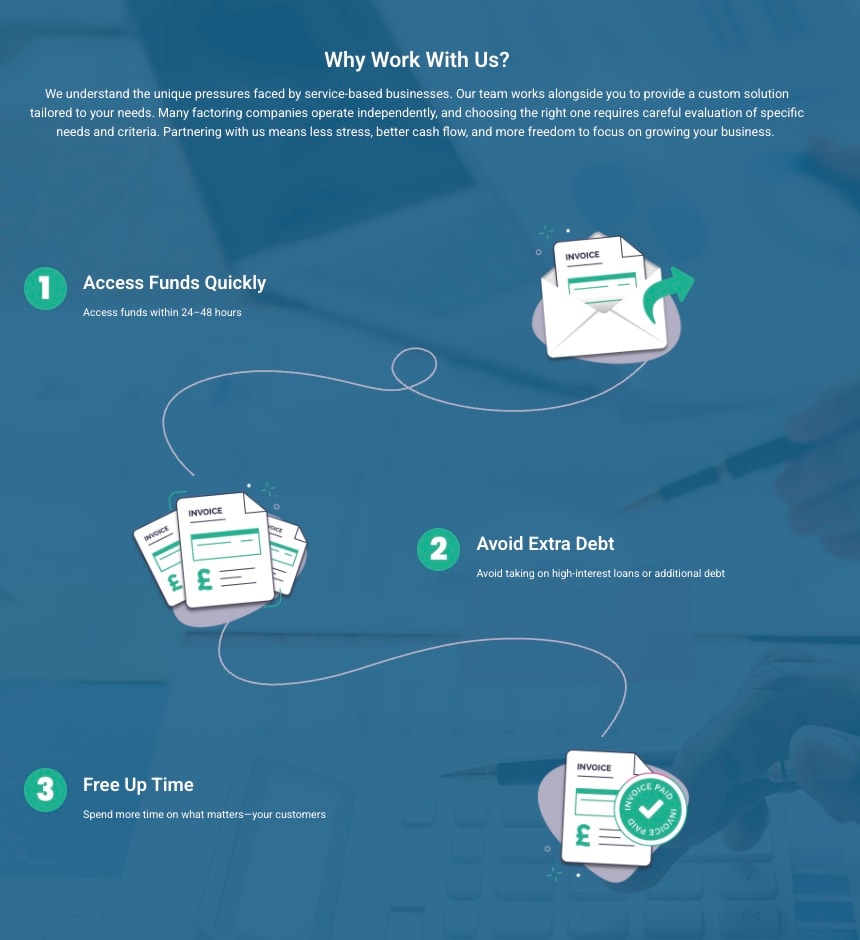
The factoring process is designed to be quick and straightforward, allowing you to access your funds without delay.
1. Invoice Submission: After placing an employee and invoicing your client, you send a copy of the invoice to the factoring company.
2. Receive Cash Advance: The factoring company verifies the invoice and advances you a significant portion of its value, often within 24 hours.
3. Collection and Final Payment: The factoring company handles the collection process with your client. Once your client pays the invoice, the factor pays you the remaining balance, minus their agreed-upon fee.
Factoring agreements outline all terms, including the advance rate and the fee structure, ensuring everything is clear.
Rapid growth can be both a blessing and a burden. When you acquire a significant new client, your payroll costs may skyrocket overnight. However, you won’t receive the revenue from that contract for several weeks or months. This creates a significant cash flow gap that makes it hard to fund your expansion. Keeping a steady cash flow is crucial to capitalizing on growth opportunities.
Many industries that rely on temporary staff see seasonal peaks and valleys. For example, retail companies hire more employees during the holiday season, while manufacturing and logistics may see demand rise at different times of the year. For a staffing company, these seasonal changes mean your payroll expenses can vary widely. Factoring provides the financial flexibility to expand your workforce during peak demand, eliminating the need to worry about payroll cash flow.
Payroll is the largest and most significant expense for any staffing company. Failing to pay on time can hurt your reputation and lead to losing your most valuable asset: your skilled employees. During periods of rapid growth or busy seasons, payroll funding poses an even greater challenge. Having quick access to working capital is essential to meeting payroll obligations consistently.
The greatest advantage of factoring is the instant access it  offers to cash you’ve already earned. This allows you to cover payroll, pay taxes, and manage other operational expenses without delay. For staffing firms aiming for growth, this quick access to cash is transformative, enabling you to respond swiftly to new opportunities.
Factoring turns your unpredictable revenue into a consistent cash flow source. This stability lessens financial strain and improves financial planning. You can operate your business with greater assurance, knowing you have funds to support your operations, regardless of your clients’ payment timelines. Many factoring companies also provide accounts receivable management services, helping you track invoices and payments more efficiently.
Unlike a traditional bank loan, factoring is not a form of debt. You are selling an asset rather than borrowing money. This means you can access capital without adding liabilities to your balance sheet, which can be especially advantageous for small businesses and startups. This keeps your credit lines open for other long-term investments, like technology upgrades or office expansion.
The funds you receive from factoring grow with your sales. As your business grows and you issue more invoices, your access to capital increases automatically. This flexibility fits perfectly with the variable cost structure of a staffing company, allowing you to manage growth spurts and scale your operations without repeatedly applying for financing.
By not spending time chasing unpaid invoices, you can focus on what you do best: recruiting talent and winning new clients. Factoring enables business owners and management teams to focus on strategic growth initiatives. You can dedicate your time to sales, marketing, and relationship-building, knowing your cash flow is secure.
Choosing a factoring partner is crucial. Look for a company that offers transparent pricing with no hidden charges. They should have a reputation for reliability and provide prompt customer support. Assess potential partners based on their advance rates, fee structures, and the terms of their agreements to find the best fit for your needs.
It is important to select a factoring provider with extensive experience in the staffing industry. A specialized partner understands your business model, the necessity of timely payroll funding, and the specifics of billing in your sector. This knowledge enables them to offer a tailored solution that meets your cash flow needs.
Your factoring company will interact with your clients, so partnering with a dependable and professional provider is essential. A good factoring partner acts as a seamless extension of your business, offering excellent customer service. They should be readily available to answer questions and help navigate any financial challenges.
Before signing any agreement, carefully review it to identify potential hidden fees, like application fees, processing charges, or termination penalties. Look for a company that provides flexible terms that meet your business goals. Avoid being locked into long-term contracts with high monthly minimums if your staffing needs vary significantly.
The most direct and effective use of factoring for a staffing company is to ensure timely payroll funding. By factoring your invoices as soon as they are created, you can ensure you have the cash to meet payroll obligations consistently. This reliability builds trust with your employees and boosts your confidence to expand your workforce.
Factoring provides the financial agility to navigate seasonal business trends. During peak times, you can factor more invoices to cover the higher payroll costs. During slower periods, you can cut back or pause your factoring activity. This flexibility keeps your cash flow positive and maintains financial stability throughout the year.
Factoring works best when it’s part of a wider financial strategy. It can complement other economic tools, such as a line of credit for capital investments. By creating a balanced approach to financing, you can take advantage of the speed and flexibility of factoring for operational needs while using other options for long-term growth projects.
An IT staffing firm secured a contract to supply a team of 20 developers to a large tech company. The opportunity was significant, but so was the weekly payroll. With the client’s 60-day payment terms, the firm faced a severe cash flow crisis. By collaborating with a factoring company, they obtained an 85% advance on their invoices within 24 hours. This allowed them to meet payroll without issues and successfully execute the contract, leading to a long-term, profitable relationship with the client.
A small staffing agency specializing in administrative support often struggled to make payroll on time due to a few slow-paying clients. This resulted in high employee turnover and damaged their reputation. They turned to factoring to solve this issue. The immediate cash flow allowed them to establish a consistent payroll schedule. Consequently, employee morale improved, turnover decreased, and the agency could grow its client base with newfound confidence.
These examples illustrate that factoring is more than just a funding tool; it’s a strategic enabler of growth. Staffing companies that use factoring effectively do so proactively. They choose partners with industry expertise and integrate factoring into their financial planning, building more resilient and scalable businesses.
Consider factoring if your staffing company frequently experiences cash flow gaps between paying employees and receiving payment from clients. If you’re hesitant to accept contracts due to upfront payroll costs or struggle with seasonal demand, factoring could be the ideal solution.
 Factoring directly fosters growth by providing immediate, flexible, and scalable access to working capital. It removes cash flow constraints that often hold staffing companies back, enabling you to confidently take on new clients, expand your workforce, and invest in your company’s future.
If you believe factoring could benefit your company, start by researching credible factoring providers specializing in staffing. Prepare an overview of your invoicing volume and cash flow needs, then reach out to potential partners to discuss your situation. This will help you find a partner who understands your goals and can assist you in achieving them.
For staffing companies, managing cash flow is crucial for both survival and success. Factoring offers a tailored solution that directly addresses the industry’s main financial challenge: the gap between payroll costs and client payments. By turning unpaid invoices into immediate cash, factoring enables you to meet payroll consistently, manage growth effectively, and focus on expanding your business.
Choosing the right factoring partner is essential to ensuring a smooth and successful experience. With a reliable partner by your side, you can transform your accounts receivable from a source of stress into a powerful engine for growth, securing the financial stability you need to thrive in the competitive staffing industry.